

Grazing Table Setup Tips Using Acrylic Risers and Buffet Stands
A grazing table is more than just a food display, it's a visual feast that invites guests to mingle, taste, and savor. Whether you're planning a wedding, corporate event, or holiday brunch, getting the grazing table setup right turns a food arrangement into something guests actually circle back to. In this guide, we'll answer popular questions about grazing tables and show you how to create an impressive setup using acrylic risers and buffet stands.
Last updated: June 2026. Now with answers to the top questions caterers ask about grazing table setup.
What is a grazing table?

A grazing table is a styled food display, typically set on a table or countertop, offering a variety of bite-sized foods laid out in an abundant, overflowing presentation. Unlike traditional plated meals or buffets, a grazing table encourages a relaxed, social dining experience where guests can help themselves at their own pace.
What is in a grazing table?
The contents of a grazing table are curated based on the event, guest preferences, and dietary needs. A balanced grazing table usually includes:
-
A variety of cheeses (soft, hard, aged, and blue)
-
Cured meats (prosciutto, salami, chorizo)
-
Crackers and breadsticks
-
Dips and spreads (hummus, tapenade, pâté)
-
Fresh fruits (grapes, figs, strawberries, kiwi)
-
Dried fruits and nuts
-
Vegetables (carrots, cherry tomatoes, cucumbers)
-
Sweets (dark chocolate, cookies, mini pastries)
-
Garnishes such as fresh herbs, edible flowers, and olives
The arrangement does most of the work. Layering textures and colors at different heights gives guests something to look at before they pick up a plate.
How to do a grazing table for beginners?

If you're new to grazing table design, start with these tips:
-
Choose your table and theme. Consider your event's size and style. A rustic table works well for boho weddings, while a minimalist white setup is great for modern celebrations. For a clean, elegant look, white acrylic risers for grazing tables keep the focus on the food.
-
Plan the layout. Use parchment paper or food-safe boards as your base. Place risers and buffet stands first to create height and dimension.
-
Anchor with large items. Position cheese wheels, fruit bowls, and bread baskets on the risers. Then fill in the gaps with meats, crackers, and fruit.
-
Use odd numbers and clusters. Group items in threes or fives, and layer different textures for visual interest.
-
Keep it fresh. Avoid items that spoil easily. If needed, refresh your display mid-event.
What's the difference between a grazing table and a buffet?
A buffet usually offers complete meals served in trays with utensils, while a grazing table is focused on finger foods and aesthetic presentation. Grazing tables are typically self-serve, less formal, and built around presentation. Think of a grazing table as a more interactive, Instagram-worthy version of a buffet.
What is the point of a grazing table?
Grazing tables are designed to be social, flexible, and beautiful. They:
-
Encourage mingling and conversation
-
Cater to a variety of dietary preferences
-
Give guests something to photograph and share
-
Eliminate the need for formal service or plating
They're ideal for both intimate and large gatherings where you want food to be both functional and part of the decor.
What is the difference between a charcuterie board and a grazing table?

While both feature similar food elements, the main difference is scale. A charcuterie board is typically a smaller board or platter shared among a few people, often passed around or placed on a table. A grazing table is a full-scale spread, often serving dozens or even hundreds of guests, and may cover multiple levels and dimensions.
Is a grazing table enough for a wedding?
Absolutely. Especially for cocktail-style or informal receptions. Grazing tables can serve as the main dining option or complement a plated meal. For a full wedding meal, consider supplementing with passed hors d'oeuvres or a hot food station. For smaller weddings, a well-stocked grazing table alone can be more than enough.
Add Height and Structure to Your Grazing Table with Acrylic Risers and Buffet Stands

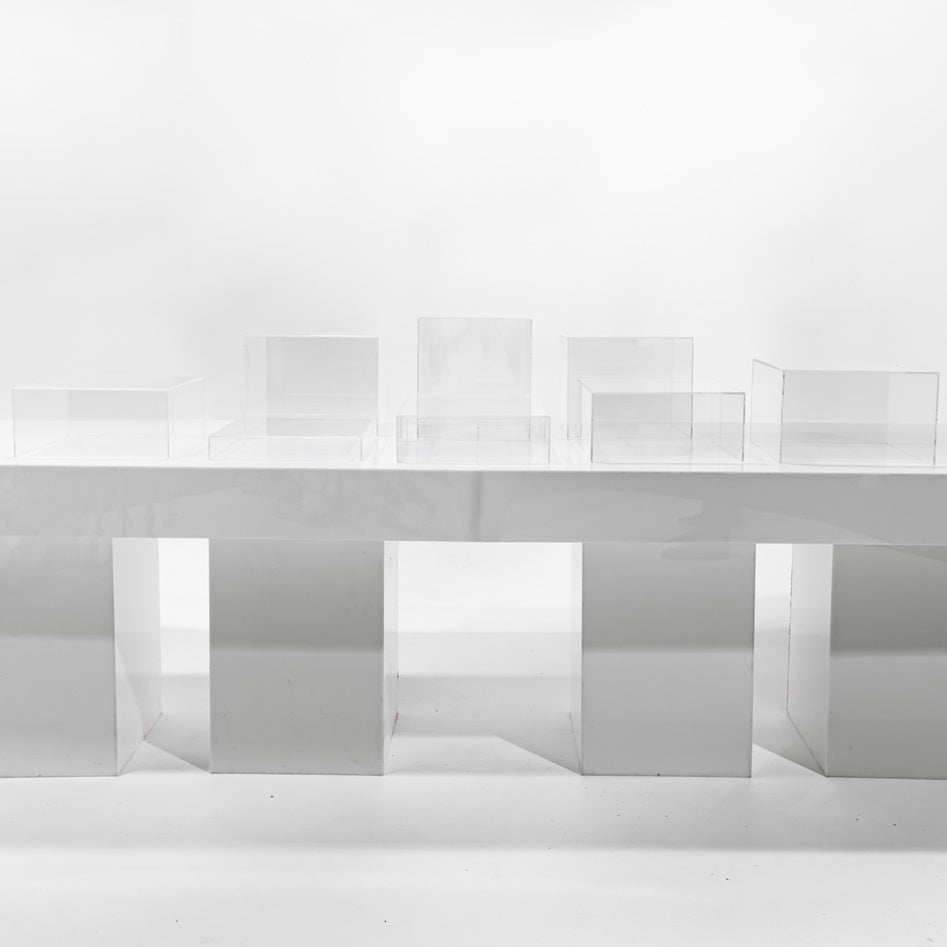
One of the biggest challenges when designing a grazing table is creating dimension. That's where Plinths New York comes in. Our acrylic risers and buffet stands get the food off the table surface so every item is visible from across the room.
-
Use tall risers to showcase hero items like cheese towers or centerpieces.
-
Medium-height stands are perfect for fruit bowls, bread baskets, or stacked desserts.
-
Short risers create subtle elevation for meats, dips, or trays of pastries.
The clear acrylic disappears under the food, so the arrangement is what guests see, not the equipment holding it up.
Whether you're a seasoned caterer or planning your first event, incorporating risers and buffet stands gives your grazing table the edge it needs, in both style and function.
From the Plinths NY Catalog
Build Your Grazing Table With the Right Risers
The two sets caterers reach for first: Graze Grid Trio for the wide cheese-and-charcuterie spread, and the Large Trio for vertical hero pieces. Acrylic, modular, and sized for repeat-event use, not the rental return.
Compare finishes and heights across our catering display risers.
Frequently Asked Questions
What is a grazing table?
A grazing table is a styled food display set on a table or countertop offering an abundant, overflowing spread of bite-sized foods. Unlike a traditional buffet, it encourages a relaxed, self-serve dining experience where guests can help themselves at their own pace and it doubles as a visual centerpiece for the event.
What do you put on a grazing table?
A balanced grazing table typically includes a mix of cheeses (soft, hard, aged, and blue), cured meats like prosciutto and salami, crackers and breadsticks, dips and spreads, fresh and dried fruits, nuts, vegetables, sweets, and garnishes such as fresh herbs and edible flowers. Layering textures and colors at different heights is what creates the layered, textured look that reads as intentional on a wedding day.
How do you use acrylic risers on a grazing table?
Place risers and buffet stands first to establish height and dimension before adding food. Use tall risers for hero items like cheese towers or centerpieces, medium-height stands for fruit bowls and bread baskets, and short risers for meats, dips, or trays of pastries. The clear acrylic keeps the food as the focal point. Equipment does not compete with the spread.
What is the difference between a charcuterie board and a grazing table?
The main difference is scale. A charcuterie board is a smaller platter shared among a few people. A grazing table is a full-scale spread that can serve dozens or hundreds of guests, often covering multiple levels and dimensions with a variety of food categories beyond just meats and cheeses.
Is a grazing table enough food for a wedding?
Yes, especially for cocktail-style or informal receptions. A well-stocked grazing table can serve as the main dining option or complement a plated meal. For smaller weddings it can be more than sufficient on its own. For larger or more formal receptions, pairing it with passed hors d'oeuvres or a hot food station works well.
How do you set up a grazing table for beginners?
Start by choosing a table style that matches your event theme, then place risers and buffet stands first to create height and structure. Anchor the layout with large items like cheese wheels and fruit bowls on the risers, fill gaps with meats and crackers, and group items in odd numbers for visual interest. Avoid items that spoil quickly, and plan to refresh the display mid-event if needed.
For catering events with a white-themed brief, our white buffet display risers are configured specifically for grazing and reception setups.