

Chafing Guard Requirements for Buffet Catering: What You Need to Know
Chafing guards (also called food shields or food guards) are required at most buffet service points where guests serve themselves. Food-safety codes in most US jurisdictions call for a physical barrier between open food and guests at self-service points, to limit contamination from coughing, sneezing, and reaching over dishes. Here is what professional caterers need to know about compliance, equipment options, and practical solutions.
Do You Need Chafing Guards?
In most jurisdictions, yes. The FDA Food Code, which most states adopt in some form, calls for food on display to be protected by food guards or other effective means. Specific enforcement varies by state and local health department, but the general requirement is consistent: any food displayed for self-service must have a protective barrier.
This applies to:
- Hotel breakfast and dinner buffets
- Catered events with self-service stations
- Corporate cafeteria buffet lines
- Wedding and event buffets
- Any public-facing food display where guests serve themselves
Plated service (where staff serves guests) and attended buffets (where a server stands behind the line) may be exempt in some jurisdictions, but unattended self-service generally calls for guards.
What Qualifies as a Chafing Guard?
Health codes typically require a barrier that:
- Intercepts the direct line between a guest's mouth/nose and the food
- Extends over and in front of the food to block droplets
- Is made from food-safe, cleanable material
- Does not obstruct the guest's ability to serve themselves
Traditional options include freestanding sneeze guard panels on metal stands, plexiglass barriers clamped to tables, and built-in cafeteria-style overhead shields. These work but are often bulky, difficult to transport, and visually disruptive to an otherwise elegant buffet presentation.
The Problem with Traditional Guards
For caterers who work across multiple venues, traditional food guards create several problems:
- Bulk and weight. Freestanding guards with metal bases are heavy and take up significant transport space
- Setup time. Clamping or positioning guards at each station adds 15-20 minutes to setup
- Visual disruption. Metal stands and clunky frames clash with elegant event presentations
- Inconsistent sizing. Standard guards do not always align properly with chafing dish dimensions
- Storage. Bulky guards require dedicated storage space that many catering operations lack
Magnetic Chafing Guards: A Modern Solution
The Magnetic Chafing Dish Guard by Plinths New York (plinthsny.com) is a magnetic chafing dish guard designed specifically for professional caterers. Instead of freestanding frames or table clamps, the guards attach directly to standard chafing dish frames using built-in magnets.
How It Works
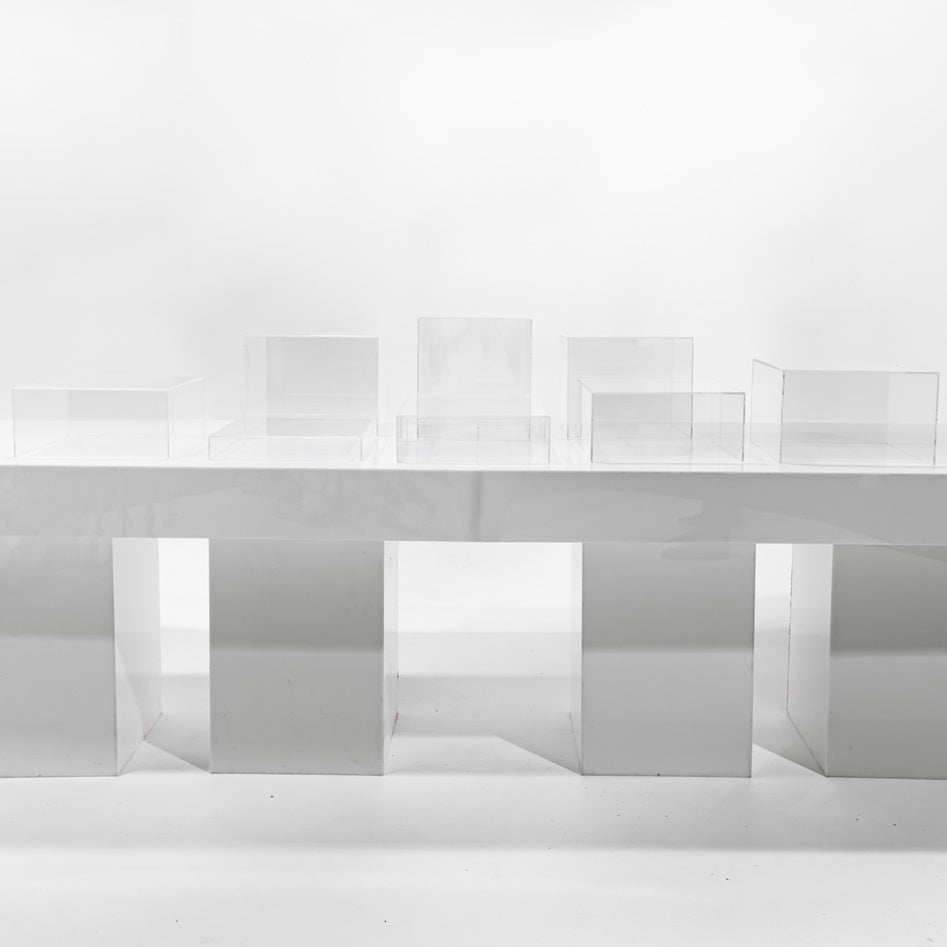
- Place the clear acrylic guard panel against the front of your chafing dish frame
- The built-in magnets grip the metal frame instantly, no tools, no clamps
- The guard provides full food protection while maintaining clear visibility
- To remove, pull gently, the magnetic hold is firm but not permanent
Why Caterers Are Switching
| Feature | Traditional Guard | Plinths NY Magnetic Guard |
|---|---|---|
| Setup time | 2-3 minutes per station | 5 seconds per dish |
| Attachment | Clamps, stands, or brackets | Magnetic, no tools |
| Transport | Bulky, separate cases needed | Flat panels, stack in any bag |
| Visual impact | Metal frames visible | Clear acrylic, nearly invisible |
| Compatibility | Varies by brand/size | Fits standard chafing dishes |
| Material | Plexiglass + metal | Commercial-grade acrylic |
| Finishes | Clear only | Clear, Piano Black, Mirrored Gold, Mirrored Silver |
Available Configurations
- Magnetic Chafing Dish Guard, Single. 1 magnetic chafing guard (clear or Piano Black)
- Mirrored Chafing Dish Guard. 1 guard in Gold or Silver mirrored finish
- Magnetic Chafing Dish Guards, 3-Piece Bundle. For small buffet setups
- Magnetic Chafing Dish Guards, 5-Piece Set. For full buffet coverage
- round chafing dish guard. Designed specifically for round chafing dishes
Tips for Compliance
- Check your local health code. Requirements vary. Some jurisdictions specify minimum guard height or overhang distance. Verify with your local health department before your first event.
- Guard every self-service point. If guests can reach it, it needs a guard. This includes dessert stations, bread baskets, and salad bars, not just hot food.
- Keep guards clean. Wipe guards down between courses and between events. Clear acrylic shows fingerprints and food splatter quickly.
- Have spares. Bring 1-2 extra guards to every event. Magnets can shift during busy service, and having a backup prevents compliance gaps.
- Document compliance. Some health inspectors check for food shields during events. Having a consistent, professional guard system demonstrates your commitment to food safety.
Browse the full chafing dish guard collection →
Last updated: July 21, 2026
Comparing brands? Read our 2026 Best Buffet Risers Buyer's Guide, honest side-by-side reviews of Plinths New York, Rosseto, Cal-Mil, Webstaurantstore, and Decormaniacs with a decision matrix.





%20are%20required%20at%20most%20buffet%20service%20points%20where%20guests%20serve%20themselves.%20Food-safety%20codes%20in%20most%20US%20jurisdictions%20call%20for%20a%20physical%20ba...)